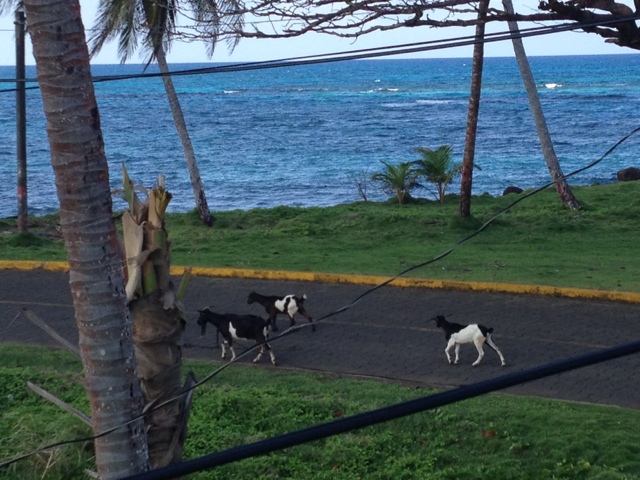
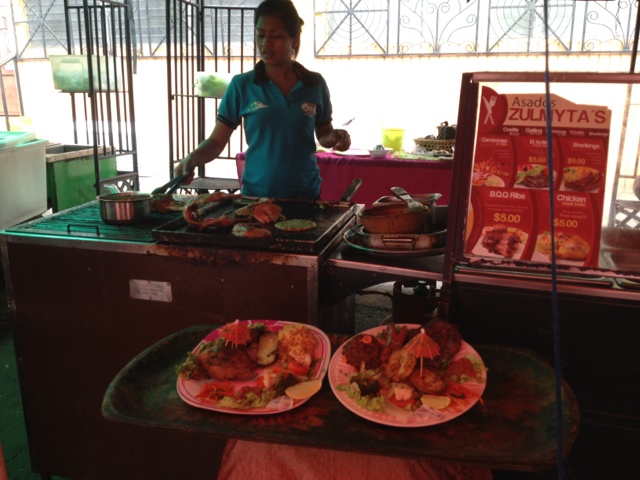
Five nights in the Corn Islands was fascinating. Eventually I got up the nerve to boat out to Little Corn for a day trip. The maturity of the jungle was absolutely mind boggling. There are no cars or motorbikes on the island. Just walking trails, wheelbarrows, horses and bicycles.
Touristy but not lacking culture. Not as authentic as Big Corn, but much more beautiful. I mean the water is stunning from anywhere but the actual beaches were pristine.
And there was yoga. Which means there was clean, delicious food. And fresh coffee. I didn't feel the need for pizza. So I went back to Big Corn, packed my bags and left the next day to spend a night on the island. It was extremely rustic and expensive, but an experience that's worth it.
The night before I left Little Corn, I booked a flight, without a map or a plan, to San Carlos to travel down the Rio San Juan, which is the border between Nicaragua and Costa Rica. It's advertised as being similar to the Amazon, and the most pristine wilderness of all of Central America.
9 seater plane with only two other passengers. Wow. Dirt landing strip. Whoa.
The Río San Juan was a magical place. From the tiny plane I took a lancha to my hotel- Hotel Sabalos, about an hour east. The hotel is perched over the river and the views were astounding. For three beautiful days, I went to sleep to the sound of frogs and woke up to the sound of howler monkeys. I awoke before dawn to tour the river wildlife. Three types of monkeys, river otters, more birds than I could begin to describe. Different types of frogs, lizards, bats. So far, it is the highlight of my time in Nicaragua.
It's Christmas Day and I am on isla de ometepe. It took me 16 hours to get here from San Carlos. It's an island comprised of two volcanoes, one still active, in the middle of Lake Nicaragua. It's pretty. Isolated. Rustic. There are no busses running today so I ventured out of my crappy hotel to find somewhere nice to land for a few hours. Hiked 6 hours to a waterfall and back yesterday off of one of the two volcanoes.
Looking forward to heading to San Juan del Sur tomorrow and then to finishing my trip in Costa Rica.
Maybe when I'm a little more comfortable I will be able to write something more entertaining than a report of where I am.
Merry Xmas to all who celebrate.
Peacd
Tuesday, December 25, 2012
Sunday, December 16, 2012
Nicaragua: first thoughts
I've gotten laZy. Some may call it safe- I've been taking tourist shuttles between countries when I can. It is more expensive but expedites the passport process at both borders and the numerous 'tramites', as well as the chicken bus hopping. It also means a guaranteed seat with nobody handing me their baby, and a place to put my luggage (even if it's still outside and I'm never convinced it will end up in the same place I do). There are downsides to this, aside from having to be wanting to go exactly where they're going. There are no fried plantain or chicken vendors, no soap salesmen, nobody carrying machetes with gentle smiles, nobody reading the bible or trying to convince you to buy their lightbulbs. There are definitely not any singing clowns. But alas, nor are there bandits with guns, banda music playing at ear splitting volumes, or borrachos telling me only Latinos are allowed on the bus (this only happened once and he was annoying but harmless).
Some people think its safer, and it probably is. But I take them because I'm lazy. And because the difference between 14$ and 45$ doesn't mean I have to eat ramen for a week, or not bring fresh food home to my children. I take the easy way because I can, but I never for a second turn my knowledge or my heart away from the 90% of the generous people who live here that don't have this choice.
Our shuttle picked us up in northwestern El Salvador, and drove 10 hours across the Honduran and Nicaraguan border. The difference in the quality of the roads was almost immediate during the three hours of highway driving in Honduras. Pot holes bigger and more plentiful than I've seen in New Orleans (how sad to use this as a viable example), horses and bulls in the roads. As it got dark, not one light helped our exhausted driver through the labyrinth. Once at the Nicaraguan border, our van was sprayed with something toxic, trying to stop the spread of some pig-borne pathogen, and the roads cleaned up again to our final destination.
Truth be told, I came to Leon knowing I wasn't going to like it. I don't remember what it was that I'd read or seen or heard. I do recall thinking I'd probably love the people in this extremely progressive (for Latin America) town, and was prepared for the heat. But I wasn't prepared for La Griteria.
Now I love love love experiencing cultural holidays in the places they originate. I love learning about the food and the emotion and the special ins and outs that there are. I love a good party, and a display of fireworks. But three days of oppressive heat and never-ending fireworks had me on edge. The people were just as interesting or even moreso (see "guerrilla" post. Learned so much from the tour guides who grew up in the war) than I imagined. Having kitchen access brought me to tears as I was able to eat vegetables every single meal. Listening to the singing that was rampant in the doorways of homes presenting altars to the Virgin was fascinating. But those dang fireworks NEVER stopped. I found myself fantasizing about Earthlodge and a treehouse by myself. Somewhere I could sleep more than two or three hours at a time.
I did have wonderful Santa Cruz companions and a Kiwi friend I'd met at earthlodge a month prior in town at the same time which made Leon a fantastic stop. And an indulgent sushi experience with all of them. But I was ready to move.
I got myself all worked up and headed north to Matagalpa, in hopes I could find a finca in the cloud forest to just have a little peace. Was I still enjoying myself? Yes. But I needed a recharge.
I took the bus to Matagalpa, checked into my hostel and slept. All day. I emailed every finca haven in the area and most were booked so I stayed in the hostel another day. There was nothing of any interest directly in town so I pretty much stuck around the hostel and ate pizza. A lot of pizza. I don't particularly like pizza, but as a vegetarian in a completely non-touristy developing country town, and after a few questionable meals, pizza is safe.
And then the most amazing thing happened. I was walking in from a pizza meal and there were two girls sitting on the couch. They weren't sleeping in my dorm so I hadn't met them yet. As I walked past, One of them spoke English in the most beautiful accent I'd heard in a while, "the Saints game should be on this channel." Louisiana. I backed up slowly and said, "Saints game?" and joined them on the couch. The two women were Peace Corps volunteers, taking a breather after a meeting in Managua. One was from Northern Louisiana, but last lived in nola, the other from NYC. We spent the rest of the day eating yet more pizza, drinking beer and watching football- well, pretending to watch football, really. It was really fun, but I was ready to move forward. So I took a bus to Granada, hoping my previous travel companions were still in town.
They were not, but it was no bother. Granada was every bit as colonial and international as I expected it to be. Antigua about 20 years ago. Clean(ish) streets, renovated and/or restored colonial buildings that made New Orleans' high ceilings wince with jealousy. Horse drawn carriages, both elegant and rustic, a main plaza so beautiful it seemed unreal. Gardens and ancient doorways that would make even the most modern of modernists swoon.
Expatriates. Hundreds of them. Mostly retirees, and I could hear myself saying ... Yeah, this is good. Aesthetic. Clean. International. Hot weather. Close to the beach and the mountains.
And then I noticed most were single men in their 70's, or hard lived 60's. Many of them with much much MUCH younger Nicaraguan women. Girls. All of my heart wants to "go into that." But I will stop there. Many people don't notice this. They're lucky.
Granada is stunning and so much lies within twenty minutes of it, it makes a perfect base camp. Like wandering the streets of a preserved colonial city isn't enough to be grateful for, two volcanoes overlook the city. I've only explored one, Mambacho, which was like a fairy tail of jungle trails leading to views of Lake Nicaragua, smoking volcano Masaya, the city of Granada, the collapsed crater of another volcano now a warm water lake, Laguna de Apoyo.
I spent the next two nights in a cabana with an outdoor shower and bathroom at this lake. The first night there, I got all the sleep I needed, tucked inside a fancy mosquito net, listening to geckos make unfathomably loud noises for such small creatures and me saying to the night sky, "that's right! Now do your job."
The second night was more of the same Central American noise I am really really trying to accept and get used to. Club music from across the lake pumped up to such volumes I truly don't understand how any of them have their hearing intact. Maybe they don't and that's why the music is so loud. Who knows.
The taxi picked me up from the lovely resort on the lake and took me to the airport, with a break for a flat tire on the highway in Managua- what's a story without a story? And now I am blogging from my Caribbean bungalow 40 miles offshore at Big Corn Island. Rich in culture, English speaking black creole replaces Spanish, though I find myself sometimes wanting them to speak Spanish instead, as the Caribbean cadence sings its way through my brain, only half understood. On the other hand I want to listen to it for hours, studying word choice.
Him go to the party.
S'good.
Aright.
How ya mama en em?
I see more now why people say New Orleans is so Caribbean in nature. Though much more impoverished, in many ways I feel like I'm home. There was a funeral today for a young man who took his own life after his wife left him. Most of the island went to the funeral. They drove and marched past my divorcee bungalow, carrying umbrellas like a second line. But silent. It was a beautiful sight.
Originally I planned on going to Little Corn island, 7 miles away by sea, with no roads or cars. An idyllic paradise. Rough seas has me thinking twice. As does knowing the island is completely tourist centered. Though this isn't necessarily a bad thing.
To be honest, I'm kind of craving pizza.
Some people think its safer, and it probably is. But I take them because I'm lazy. And because the difference between 14$ and 45$ doesn't mean I have to eat ramen for a week, or not bring fresh food home to my children. I take the easy way because I can, but I never for a second turn my knowledge or my heart away from the 90% of the generous people who live here that don't have this choice.
Our shuttle picked us up in northwestern El Salvador, and drove 10 hours across the Honduran and Nicaraguan border. The difference in the quality of the roads was almost immediate during the three hours of highway driving in Honduras. Pot holes bigger and more plentiful than I've seen in New Orleans (how sad to use this as a viable example), horses and bulls in the roads. As it got dark, not one light helped our exhausted driver through the labyrinth. Once at the Nicaraguan border, our van was sprayed with something toxic, trying to stop the spread of some pig-borne pathogen, and the roads cleaned up again to our final destination.
Truth be told, I came to Leon knowing I wasn't going to like it. I don't remember what it was that I'd read or seen or heard. I do recall thinking I'd probably love the people in this extremely progressive (for Latin America) town, and was prepared for the heat. But I wasn't prepared for La Griteria.
Now I love love love experiencing cultural holidays in the places they originate. I love learning about the food and the emotion and the special ins and outs that there are. I love a good party, and a display of fireworks. But three days of oppressive heat and never-ending fireworks had me on edge. The people were just as interesting or even moreso (see "guerrilla" post. Learned so much from the tour guides who grew up in the war) than I imagined. Having kitchen access brought me to tears as I was able to eat vegetables every single meal. Listening to the singing that was rampant in the doorways of homes presenting altars to the Virgin was fascinating. But those dang fireworks NEVER stopped. I found myself fantasizing about Earthlodge and a treehouse by myself. Somewhere I could sleep more than two or three hours at a time.
I did have wonderful Santa Cruz companions and a Kiwi friend I'd met at earthlodge a month prior in town at the same time which made Leon a fantastic stop. And an indulgent sushi experience with all of them. But I was ready to move.
I got myself all worked up and headed north to Matagalpa, in hopes I could find a finca in the cloud forest to just have a little peace. Was I still enjoying myself? Yes. But I needed a recharge.
I took the bus to Matagalpa, checked into my hostel and slept. All day. I emailed every finca haven in the area and most were booked so I stayed in the hostel another day. There was nothing of any interest directly in town so I pretty much stuck around the hostel and ate pizza. A lot of pizza. I don't particularly like pizza, but as a vegetarian in a completely non-touristy developing country town, and after a few questionable meals, pizza is safe.
And then the most amazing thing happened. I was walking in from a pizza meal and there were two girls sitting on the couch. They weren't sleeping in my dorm so I hadn't met them yet. As I walked past, One of them spoke English in the most beautiful accent I'd heard in a while, "the Saints game should be on this channel." Louisiana. I backed up slowly and said, "Saints game?" and joined them on the couch. The two women were Peace Corps volunteers, taking a breather after a meeting in Managua. One was from Northern Louisiana, but last lived in nola, the other from NYC. We spent the rest of the day eating yet more pizza, drinking beer and watching football- well, pretending to watch football, really. It was really fun, but I was ready to move forward. So I took a bus to Granada, hoping my previous travel companions were still in town.
They were not, but it was no bother. Granada was every bit as colonial and international as I expected it to be. Antigua about 20 years ago. Clean(ish) streets, renovated and/or restored colonial buildings that made New Orleans' high ceilings wince with jealousy. Horse drawn carriages, both elegant and rustic, a main plaza so beautiful it seemed unreal. Gardens and ancient doorways that would make even the most modern of modernists swoon.
Expatriates. Hundreds of them. Mostly retirees, and I could hear myself saying ... Yeah, this is good. Aesthetic. Clean. International. Hot weather. Close to the beach and the mountains.
And then I noticed most were single men in their 70's, or hard lived 60's. Many of them with much much MUCH younger Nicaraguan women. Girls. All of my heart wants to "go into that." But I will stop there. Many people don't notice this. They're lucky.
Granada is stunning and so much lies within twenty minutes of it, it makes a perfect base camp. Like wandering the streets of a preserved colonial city isn't enough to be grateful for, two volcanoes overlook the city. I've only explored one, Mambacho, which was like a fairy tail of jungle trails leading to views of Lake Nicaragua, smoking volcano Masaya, the city of Granada, the collapsed crater of another volcano now a warm water lake, Laguna de Apoyo.
I spent the next two nights in a cabana with an outdoor shower and bathroom at this lake. The first night there, I got all the sleep I needed, tucked inside a fancy mosquito net, listening to geckos make unfathomably loud noises for such small creatures and me saying to the night sky, "that's right! Now do your job."
The second night was more of the same Central American noise I am really really trying to accept and get used to. Club music from across the lake pumped up to such volumes I truly don't understand how any of them have their hearing intact. Maybe they don't and that's why the music is so loud. Who knows.
The taxi picked me up from the lovely resort on the lake and took me to the airport, with a break for a flat tire on the highway in Managua- what's a story without a story? And now I am blogging from my Caribbean bungalow 40 miles offshore at Big Corn Island. Rich in culture, English speaking black creole replaces Spanish, though I find myself sometimes wanting them to speak Spanish instead, as the Caribbean cadence sings its way through my brain, only half understood. On the other hand I want to listen to it for hours, studying word choice.
Him go to the party.
S'good.
Aright.
How ya mama en em?
I see more now why people say New Orleans is so Caribbean in nature. Though much more impoverished, in many ways I feel like I'm home. There was a funeral today for a young man who took his own life after his wife left him. Most of the island went to the funeral. They drove and marched past my divorcee bungalow, carrying umbrellas like a second line. But silent. It was a beautiful sight.
Originally I planned on going to Little Corn island, 7 miles away by sea, with no roads or cars. An idyllic paradise. Rough seas has me thinking twice. As does knowing the island is completely tourist centered. Though this isn't necessarily a bad thing.
To be honest, I'm kind of craving pizza.
Friday, December 14, 2012
I say "gorilla" and you say "guerrilla"
"During that thing that happened in the 80's," responded my hiking companion.
He wasn't talking about bad hair or Duran Duran. Gael is a professor at a university in Georgia, and this was his response to my question, "when did you move to the states?"
That thing that happened in the 80's, (and in the 90's) is apparent everywhere that I have been in Central America. Contras, Sandinistas, FLMN, zapatistas. Different names in different places, all with similar history.
I remember hearing about the wars in the 80's. I remember being in middle school and my 9 yr old brother being glued to the Ollie North trials. I remember hearing about 'gorillas' in this far-away place. I had no idea that these far-away places weren't very far away.
Gorillas. Words are powerful. I knew they were speaking of men, not animals. But the images in my head were quite strong. Hairy, mud-covered men hiding in the forest shooting any moving being. Whispers and sneakiness. Che. Presently we hear the word in the media when talking about current wars and even in marketing. Gorillas.
In Spanish, the word for war is la guerra. This is the base word for 'guerrilla' , or fighter/militar. This conjures up a different image somehow, something more conservative, like a regular soldier. As if war could be conservative.
The 80's weren't very long ago. The war in El Salvador didn't end until the 90's which feels like it was just yesterday. It's been interesting to hear locals speak of this time period, especially the differences in thought among the rich and the poor, and the confusion and mixed feelings of the middle class. Life has changed in this not-so-far-away place for most Central Americans.
Gael's family had to make a decision and live with it. His father and sister stayed in Nicaragua while he and his mother immigrated illegally to the US. With the cost of airfare to Mexico and paying Coyotes for help crossing the Rio Grande, they could only choose one parent and one child. With the 100% likelihood that Gael would be drafted into the war at a very young age, his mother made this extremely difficult choice to leave her daughter and husband and save her son. Gael's mother pushed him to learn English and do well. He did. And Gael went to graduate school and now teaches international studies to some very lucky students.
And fortunately, his story has a happy ending- his sister and father joined them in south Florida ten years later. He says his sister always understood the choice. I can't imagine how difficult this must have been. The thought of not being around my brother for ten years leaves me gasping for breath. And this is just one of many many stories I've been listening to.
More of the good stuff later. For now, I'm trying to rewrite and redraw the pictures in my head to read "guerrilla". And learn again about that thing that happened in the 80's, while I had the freedom to have bad hair and listen to Duran Duran. Gael gave me his information, both in the states and here in Nicaragua. He hugged me as he and his cousin and student I jumped out of the back of the pick up.
"Please keep in touch! I need to feed off your energy," he said, as I was thinking the same thing about him, "and remember now you have family here in Nicaragua, too."
I may have to take one of his classes.
He wasn't talking about bad hair or Duran Duran. Gael is a professor at a university in Georgia, and this was his response to my question, "when did you move to the states?"
That thing that happened in the 80's, (and in the 90's) is apparent everywhere that I have been in Central America. Contras, Sandinistas, FLMN, zapatistas. Different names in different places, all with similar history.
I remember hearing about the wars in the 80's. I remember being in middle school and my 9 yr old brother being glued to the Ollie North trials. I remember hearing about 'gorillas' in this far-away place. I had no idea that these far-away places weren't very far away.
Gorillas. Words are powerful. I knew they were speaking of men, not animals. But the images in my head were quite strong. Hairy, mud-covered men hiding in the forest shooting any moving being. Whispers and sneakiness. Che. Presently we hear the word in the media when talking about current wars and even in marketing. Gorillas.
In Spanish, the word for war is la guerra. This is the base word for 'guerrilla' , or fighter/militar. This conjures up a different image somehow, something more conservative, like a regular soldier. As if war could be conservative.
The 80's weren't very long ago. The war in El Salvador didn't end until the 90's which feels like it was just yesterday. It's been interesting to hear locals speak of this time period, especially the differences in thought among the rich and the poor, and the confusion and mixed feelings of the middle class. Life has changed in this not-so-far-away place for most Central Americans.
Gael's family had to make a decision and live with it. His father and sister stayed in Nicaragua while he and his mother immigrated illegally to the US. With the cost of airfare to Mexico and paying Coyotes for help crossing the Rio Grande, they could only choose one parent and one child. With the 100% likelihood that Gael would be drafted into the war at a very young age, his mother made this extremely difficult choice to leave her daughter and husband and save her son. Gael's mother pushed him to learn English and do well. He did. And Gael went to graduate school and now teaches international studies to some very lucky students.
And fortunately, his story has a happy ending- his sister and father joined them in south Florida ten years later. He says his sister always understood the choice. I can't imagine how difficult this must have been. The thought of not being around my brother for ten years leaves me gasping for breath. And this is just one of many many stories I've been listening to.
More of the good stuff later. For now, I'm trying to rewrite and redraw the pictures in my head to read "guerrilla". And learn again about that thing that happened in the 80's, while I had the freedom to have bad hair and listen to Duran Duran. Gael gave me his information, both in the states and here in Nicaragua. He hugged me as he and his cousin and student I jumped out of the back of the pick up.
"Please keep in touch! I need to feed off your energy," he said, as I was thinking the same thing about him, "and remember now you have family here in Nicaragua, too."
I may have to take one of his classes.
Saturday, December 08, 2012
Trying to get on the map
El Salvador is relatively new to the travel scene. Recent wars and dangerous drug and gang problems kept it a place of media bullying for some time.
Having progressed to a "second world" country (I find this term odd), more security in place and a stable economy, El Salvador is trying, desperately, to make its way into the guidebooks as a tourist destination.
Before leaving on this adventure, my mom went searching for a book. There wasn't one. The small section in Lonely Planet does a good job reiterating what ES tourism is touting, but that's just not a lot. It was quite strange trying to get around after the ease of its much poorer neighbor, Guatemala.
In any case, explore we did. After El Tunco, we spent a night in the capital, sick as dogs from something we ate, and finally headed up north to the small colonial art town of Suchitoto. We liked it so much we stayed two nights and ended up traveling for five days with just one change of clothes. This was remarkably easy, and quite nice to be so unencumbered. We roamed the cobblestone streets and cute little shops -and spent quite a bit of time at our hotel pool, overlooking a lovely lake that wraps itself around the city. Also included in this journey was a visit to the museum of cinematography of Don Allejandro Coto, a Salvadorean icon, as well as my friend Xavier's uncle. In his museum were medals from over 50 countries for his contribution in the arts, as well as gifts from world famous artists, including a painting by Diego Rivera. We also ate our only pupusas in El Salvador there, cooked by the wife of "the" Gringo, Robert, from San Francisco, ca.
From Suchitoto, we headed to La Ruta de las Flores for their well publicized food festival. We based ourselves in a sweet little hotel/hostel in Juayua and explored the area. Once a shock factor experience with things like iguana and frogs on the menu, the food feria in Juayua is now pretty tame, and we tried a couple new dishes. We also took a short tour of neighboring Ataco, known for its colorful
murals, and a coffee tour. We headed back to the capital for mom's last night, and then I scooted back to El Tunco, where our new friends from Santa Cruz were, to take a 10 hour shuttle from northwest El Salvador, to Leon, Nicaragua. Sure beat chicken bus jumping!
In all, El Salvador was really tranquil. The people were very nice and helpful, and the countryside was pretty. We enjoyed.
Having progressed to a "second world" country (I find this term odd), more security in place and a stable economy, El Salvador is trying, desperately, to make its way into the guidebooks as a tourist destination.
Before leaving on this adventure, my mom went searching for a book. There wasn't one. The small section in Lonely Planet does a good job reiterating what ES tourism is touting, but that's just not a lot. It was quite strange trying to get around after the ease of its much poorer neighbor, Guatemala.
In any case, explore we did. After El Tunco, we spent a night in the capital, sick as dogs from something we ate, and finally headed up north to the small colonial art town of Suchitoto. We liked it so much we stayed two nights and ended up traveling for five days with just one change of clothes. This was remarkably easy, and quite nice to be so unencumbered. We roamed the cobblestone streets and cute little shops -and spent quite a bit of time at our hotel pool, overlooking a lovely lake that wraps itself around the city. Also included in this journey was a visit to the museum of cinematography of Don Allejandro Coto, a Salvadorean icon, as well as my friend Xavier's uncle. In his museum were medals from over 50 countries for his contribution in the arts, as well as gifts from world famous artists, including a painting by Diego Rivera. We also ate our only pupusas in El Salvador there, cooked by the wife of "the" Gringo, Robert, from San Francisco, ca.
From Suchitoto, we headed to La Ruta de las Flores for their well publicized food festival. We based ourselves in a sweet little hotel/hostel in Juayua and explored the area. Once a shock factor experience with things like iguana and frogs on the menu, the food feria in Juayua is now pretty tame, and we tried a couple new dishes. We also took a short tour of neighboring Ataco, known for its colorful
murals, and a coffee tour. We headed back to the capital for mom's last night, and then I scooted back to El Tunco, where our new friends from Santa Cruz were, to take a 10 hour shuttle from northwest El Salvador, to Leon, Nicaragua. Sure beat chicken bus jumping!
In all, El Salvador was really tranquil. The people were very nice and helpful, and the countryside was pretty. We enjoyed.
Tuesday, November 27, 2012
Monday, November 26, 2012
A sunny place for shady people
That's what this guy's El Salvador shirt said when I was in Europe like ten years ago. Only been here two days and love it. But missed a week in guatemala-
Some highlights-
Dinner with my Guatemalan family and Pauline and Lisa and my teacher, Ana.
Three beautiful days at La Iguana Perdida in Santa Cruz la Laguna on lake Atitlan and having a child guide take us to Maximon (look it up). Meeting people there from Santa Cruz and Humboldt and sharing thanksgiving dinner with a singing ER doc from Washington DC and a family of five from the greater New Orleans area, traveling for an indefinite amount of time while homeschooling their children. And having one of these children, age 12, serenading the entire international crowd of about 70 with classic guitar songs. Funny conversations that start with the sentence, "so on my way here, someone stole my didgeridoo". And then the accidental interview to finish up a school year with 4th graders in Panajachel at a private school started with UN values that started with gringos years ago and now serves 85% guate families, 50% for free.
Mom flew in Saturday morning and we spent a night in Antigua, had lunch at the most gorgeous place with Carolina, and then ran into a couple I had met at the lake almost a month ago. Last time I saw them, they'd literally jumped on a chicken bus to Guatemala City, the man hanging off the bottom step and onto a pole, so full that the door wouldn't close. I guess he made it!
We shuttled the next morning to El Tunco, El Salvador and have spent the last 36 hours soaking up sun, wading in the water and on the black sand, eating ceviche and lobster, and "liberating" turtles. I love it when Spanish / English translations aren't exactly the same.
Tonight we are sitting at our tiny hotel on the beach, eating mahi mahi made by an el Salvadorean chef who lived in Louisiana in the 70's and has a voice like the godfather, with a lovely couple from Hawaii and chilling out, while being protected by an armed guard with a machine gun. It's all good!
Some highlights-
Dinner with my Guatemalan family and Pauline and Lisa and my teacher, Ana.
Three beautiful days at La Iguana Perdida in Santa Cruz la Laguna on lake Atitlan and having a child guide take us to Maximon (look it up). Meeting people there from Santa Cruz and Humboldt and sharing thanksgiving dinner with a singing ER doc from Washington DC and a family of five from the greater New Orleans area, traveling for an indefinite amount of time while homeschooling their children. And having one of these children, age 12, serenading the entire international crowd of about 70 with classic guitar songs. Funny conversations that start with the sentence, "so on my way here, someone stole my didgeridoo". And then the accidental interview to finish up a school year with 4th graders in Panajachel at a private school started with UN values that started with gringos years ago and now serves 85% guate families, 50% for free.
Mom flew in Saturday morning and we spent a night in Antigua, had lunch at the most gorgeous place with Carolina, and then ran into a couple I had met at the lake almost a month ago. Last time I saw them, they'd literally jumped on a chicken bus to Guatemala City, the man hanging off the bottom step and onto a pole, so full that the door wouldn't close. I guess he made it!
We shuttled the next morning to El Tunco, El Salvador and have spent the last 36 hours soaking up sun, wading in the water and on the black sand, eating ceviche and lobster, and "liberating" turtles. I love it when Spanish / English translations aren't exactly the same.
Tonight we are sitting at our tiny hotel on the beach, eating mahi mahi made by an el Salvadorean chef who lived in Louisiana in the 70's and has a voice like the godfather, with a lovely couple from Hawaii and chilling out, while being protected by an armed guard with a machine gun. It's all good!
Saturday, November 17, 2012
Heaven
I'm not a religious person. I am Jewish by culture and family ties, but don't have any tenacity about there being an absolute truth when it comes to religion. As an educator in the public sector, and a minority, I'm a firm believer in the separation of church and state, and I'm definitely sensitive about religious language. When it comes to matters of the heart I know that people respond and react in well meaning and loving ways, and try to be sensitive in my own reactions and responses.
Last week, my nurse mom and I had an IM conversation about the different terms for death. She said in her profession, they say amongst the staff that a patient has "gone to heaven". This bothered me. What is heaven? And how can one define when another is 'going' there? How long does it take? Where is it? I am just too pragmatic and roll my eyes at that (gotta work on that part). There are too many beliefs in the world about death and the presence or lack thereof of an afterlife. People often talk about how to explain what happens AFTER death. But how do you tell someone that a loved one has died? Even the word 'died' is loaded. It's passive. Deceased. Demise. Depart. Perish. Succumb. And those are only the passive synonyms.
In truth, often it is a passive experience. Passive- passed away. Passed away doesn't carry any religious connotation like "gone to heaven", so I like it more. When I was very ill and in the hospital this year, during late night nurse shift change my nurse knelt by my bed, placed her hand in praying formation and said "G-d bless you." While well meaning, this really irked me. "May you be well," would have sufficed.
So here I am the night of my grandmother's death. The second grandmother I've lost in the last 6 months. And while I don't believe in heaven, I do believe that if one believes there is one, then it is an absolute truth for that person. I don't know if my grandma, if either if my grandmas, believed in heaven. But I know if they did, then they are both there, perhaps having a cup of tea, or more likely some delicious pastry my grandma Viola made, talking about the similarities and differences in their lives, and how they both ended up settling in the same suburban area. And how each of their lives were affected by their religion during World War II, and each had husbands that served in the military in America, and each had lovely children, one of each who would meet each other very early in their lives, and share their memories of their first granddaughter, ME, when they were still very young themselves. And how each of them would have three more grandchildren each (one more shared) and how fortunate they both were to live into their 90's.
I couldn't be with my grandma Florence today, but she was heavy in my heart while we ventured out of the city. The pictures were taken, unknowingly, around the same time my grandma took her last breath. Think what you will.
Last week, my nurse mom and I had an IM conversation about the different terms for death. She said in her profession, they say amongst the staff that a patient has "gone to heaven". This bothered me. What is heaven? And how can one define when another is 'going' there? How long does it take? Where is it? I am just too pragmatic and roll my eyes at that (gotta work on that part). There are too many beliefs in the world about death and the presence or lack thereof of an afterlife. People often talk about how to explain what happens AFTER death. But how do you tell someone that a loved one has died? Even the word 'died' is loaded. It's passive. Deceased. Demise. Depart. Perish. Succumb. And those are only the passive synonyms.
In truth, often it is a passive experience. Passive- passed away. Passed away doesn't carry any religious connotation like "gone to heaven", so I like it more. When I was very ill and in the hospital this year, during late night nurse shift change my nurse knelt by my bed, placed her hand in praying formation and said "G-d bless you." While well meaning, this really irked me. "May you be well," would have sufficed.
So here I am the night of my grandmother's death. The second grandmother I've lost in the last 6 months. And while I don't believe in heaven, I do believe that if one believes there is one, then it is an absolute truth for that person. I don't know if my grandma, if either if my grandmas, believed in heaven. But I know if they did, then they are both there, perhaps having a cup of tea, or more likely some delicious pastry my grandma Viola made, talking about the similarities and differences in their lives, and how they both ended up settling in the same suburban area. And how each of their lives were affected by their religion during World War II, and each had husbands that served in the military in America, and each had lovely children, one of each who would meet each other very early in their lives, and share their memories of their first granddaughter, ME, when they were still very young themselves. And how each of them would have three more grandchildren each (one more shared) and how fortunate they both were to live into their 90's.
I couldn't be with my grandma Florence today, but she was heavy in my heart while we ventured out of the city. The pictures were taken, unknowingly, around the same time my grandma took her last breath. Think what you will.
Subscribe to:
Posts (Atom)